Source eco friendly recyclable plastic flower pots for Home, Garden, Hotel
Compare 27 listings of eco friendly recyclable plastic flower pots in various sizes and styles for home gardening, desktops, and hotel use. Buyers can review specifications, materials, and pricing to find suitable options for flowers and plants.
Key considerations
Products List



Comprehensive Sourcing Guide
Strategic Sourcing Guide for Eco-Friendly Recyclable Plastic Flower Pots
Understanding the Product Landscape and Technical Specifications
The global demand for sustainable gardening solutions has elevated the profile of eco-friendly recyclable plastic flower pots. These products represent a critical intersection of environmental responsibility and practical horticulture. When sourcing these items, buyers must first distinguish between general plastic containers and those specifically engineered for recyclability and reduced environmental impact. The core material identified in the available market data is plastic, which serves as the foundational element for a wide range of pot models.
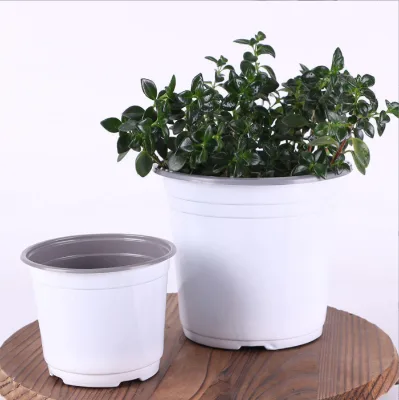
Technical specifications vary significantly across the supply base, influencing both the utility and the end-of-life profile of the product. Observations from the current market indicate a diverse range of sizes, categorized explicitly as Small, Medium, and Large. This segmentation is crucial for matching the pot to specific plant requirements. For instance, models designated as "Small" are often suited for seedlings or compact desktop arrangements, while "Large" variants, such as those with dimensions like a diameter of 42cm and a height of 37.5cm, are designed for mature plants or floor-standing displays.
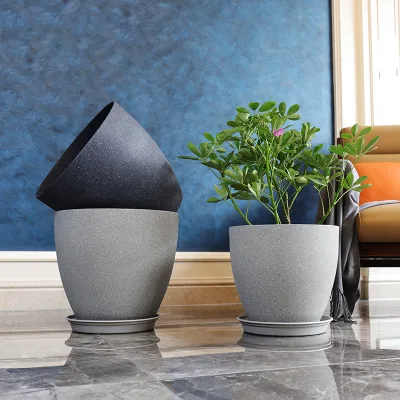
The physical form of the pot is another primary specification. The market offers both Round and Square shapes, each presenting distinct advantages for space utilization and aesthetic integration. Round pots are traditional and often preferred for their uniform stress distribution, whereas square pots maximize floor space efficiency in commercial settings like shopping malls or hotels. Furthermore, the production method is predominantly mechanical, ensuring consistency in wall thickness and structural integrity. The finishing process also varies; some units are glazed to provide a glossy, water-resistant surface, while others remain uncoated, offering a more natural, matte texture that may appeal to specific design sensibilities.
| Specification Category | Observed Variations | Sourcing Implication |
|---|---|---|
| Size | Small, Medium, Large | Must align with target plant volume and display area. |
| Shape | Round, Square | Determines spatial efficiency and aesthetic compatibility. |
| Material | Plastic | Verify specific polymer type for recyclability claims. |
| Finishing | Glazed, Not Coated | Affects water retention, cleaning ease, and visual style. |
| Function | Self-Watering, Standard | Self-watering models add complexity but offer convenience. |
Compliance, Certification, and Environmental Standards
When evaluating eco-friendly claims, buyers must rigorously verify compliance and certification status. The presence of specific certifications is a strong indicator of a supplier's commitment to quality management and ethical sourcing. In the observed market data, certain products carry ISO9001 and BSCI certifications. ISO9001 signifies that the manufacturer adheres to international quality management standards, ensuring consistent production processes. BSCI (Business Social Compliance Initiative) certification indicates that the supplier meets specific social compliance standards regarding labor practices, which is increasingly important for B2B buyers concerned with corporate social responsibility.
However, the term "eco-friendly" requires careful interpretation. While the material is identified as plastic, the specific recyclability of the polymer is not universally guaranteed by the general category. Buyers should not assume that all plastic pots listed are recyclable without verifying the resin identification code or specific material composition. Some products in the market are described with standards such as "Epp" or specific dimensional standards like "Dia: 29.5cm, Height: 42.2cm," which serve as quality benchmarks but do not inherently confirm environmental credentials.
The origin of the products is predominantly China, with specific manufacturing hubs noted in regions like Shandong, Zhejiang (including Wenling), and general provincial locations. This geographic concentration suggests a mature supply chain, but it also necessitates due diligence regarding local environmental regulations and export compliance. Buyers should request documentation proving that the plastic used meets the recyclability standards of the destination market, as recycling infrastructure varies globally. Additionally, the "Standard" classification for some products implies adherence to general industry norms, but specific eco-certifications (such as FSC or specific plastic recycling logos) must be explicitly requested and verified rather than assumed.
Cost Drivers and Pricing Dynamics
The pricing structure for plastic flower pots is influenced by a complex array of factors, including material costs, production complexity, and order volume. The observed price range in the market is extensive, spanning from $0.28 to $779 USD. This wide variance reflects the difference between basic, small-scale units and large, specialized, or high-volume commercial orders. The Minimum Order Quantity (MOQ) also plays a pivotal role in cost determination, with observed ranges from 1 to 10,000 units.
For buyers seeking the most cost-effective solutions, understanding the relationship between unit price and volume is essential. Lower unit prices, such as the $0.28 figure, are typically associated with higher MOQs and simpler designs. Conversely, specialized features like self-watering mechanisms, specific finishing treatments like glazing, or custom branding can drive costs toward the higher end of the spectrum. The weight of the product is another significant cost driver; for example, a specific model with a net weight of 3305g or a 1kg variant will incur different shipping and material costs compared to lighter alternatives.
Packaging is a critical, often overlooked cost component. The market data indicates that products are shipped in cartons, with options ranging from standard cartons to specialized "Standard Package for Delivery." The choice of packaging affects both the unit cost and the logistics efficiency. Bulkier packaging increases shipping volume and cost, while optimized packaging can reduce the landed cost per unit. Buyers should negotiate packaging specifications to balance product protection with cost efficiency, especially when importing large quantities.
Typical Applications and Use Cases
The versatility of plastic flower pots allows them to serve a multitude of applications across various sectors. The primary use type identified is for flowers and plants, making them suitable for both residential and commercial environments. The "Home Gardening" scene is a dominant application, where pots are used to enhance aesthetic appeal and manage plant growth. In this context, the style of the pot, such as "Antique" or "Simple," becomes a key selection criterion to match interior or exterior design themes.
Beyond residential use, these pots are widely utilized in commercial and public spaces. The "Desktop" use type highlights their suitability for office environments, retail displays, and hotel lobbies. Specific models are designed for "Floor Type" applications, indicating their robustness for larger plants in high-traffic areas. The "Shopping Mall" and "Hotel" applications suggest that durability and aesthetic consistency are paramount in these settings. Some products are marketed for "Everyday" use, implying they are designed for long-term durability rather than seasonal decoration.
The functional attributes of the pots further expand their application scope. Self-watering models are particularly valuable for applications where consistent moisture is critical, such as in hotels or commercial offices where maintenance schedules may be irregular. The ability to customize the product allows suppliers to tailor solutions for specific client needs, whether it involves branding, color (such as the observed "White" option), or specific dimensions to fit unique architectural features.
Supplier Evaluation and Sourcing Strategy
Selecting the right supplier is a critical step in the procurement process. Given that the majority of observed products originate from China, buyers should focus on suppliers with a proven track record in international trade. The presence of certifications like ISO9001 and BSCI serves as a preliminary filter for supplier quality and ethical standards. However, buyers must go beyond certifications and evaluate the supplier's production capabilities.
The "Customization: Available" attribute is a significant advantage for buyers looking to differentiate their product offerings. Suppliers that offer customization can provide tailored solutions regarding size, shape, color, and branding. When evaluating potential partners, buyers should assess the supplier's ability to handle the specific production method (mechanical) and finishing processes (glazed or uncoated) required for their project.
Location is another factor to consider. Suppliers in regions like Wenling, Zhejiang, or Shandong may have specialized expertise in plastic manufacturing. Buyers should verify the supplier's capacity to meet the required production volume, as indicated by the wide MOQ range. A supplier capable of handling orders from 1 unit to 10,000 units offers flexibility, but buyers must ensure that the supplier can maintain quality consistency across different order sizes. Additionally, the "Other" standard classification for some products suggests that suppliers may be open to developing custom standards, which can be beneficial for niche applications.
Quality Control and Long-Term Procurement Considerations
Ensuring consistent quality is paramount when sourcing plastic flower pots. The mechanical production method generally ensures uniformity, but buyers must implement robust quality control measures. Key areas to inspect include the structural integrity of the pot, the consistency of the glazing or finishing, and the accuracy of dimensions. For example, verifying that a "Large" pot matches the specified diameter and height is essential for fitting specific planters or display units.
Long-term procurement considerations involve building a sustainable supply chain. Buyers should prioritize suppliers who demonstrate a commitment to environmental responsibility, even if specific eco-certifications are not immediately visible. This includes inquiring about the recyclability of the plastic used and the supplier's waste management practices. The "Natural" attribute observed in some product descriptions may indicate the use of recycled materials or a design philosophy that mimics natural aesthetics, but this requires verification.
Furthermore, buyers should consider the lifecycle of the product. While plastic pots are durable, their end-of-life management is a critical factor in their "eco-friendly" status. Procurement strategies should include plans for the disposal or recycling of the pots after their useful life. Establishing a relationship with a supplier who can provide guidance on recycling programs or who uses mono-materials that are easier to recycle can add significant value to the procurement process.
In conclusion, sourcing eco-friendly recyclable plastic flower pots requires a balanced approach that considers technical specifications, compliance, cost, and long-term sustainability. By leveraging the available market data and conducting thorough due diligence, buyers can identify suppliers that offer high-quality, versatile, and environmentally responsible solutions. The diversity of the market, from small desktop units to large floor-standing pots, provides ample opportunities for buyers to find products that meet their specific needs while adhering to their sustainability goals.
FAQs
What certifications do eco friendly recyclable plastic flower pots have?
Some products carry ISO9001 and BSCI certifications. These indicate adherence to international quality management standards and ethical labor practices, though specific environmental recyclability claims require verification beyond general category descriptions.
Which sizes are available for plastic flower pots?
The market offers Small, Medium, and Large sizes. Small variants suit seedlings, while Large pots, such as those with a 42cm diameter, are designed for mature plants or floor-standing displays in various settings.
Can I customize the plastic flower pots for my brand?
Customization is available for these products. Suppliers can tailor solutions regarding size, shape, color, and branding to meet specific client needs, allowing for differentiation in residential or commercial applications.
How are these plastic flower pots packaged for delivery?
Products are typically shipped in cartons. Options range from standard cartons to specialized standard packages for delivery, which affects shipping volume and cost efficiency for bulk orders.
What production methods are used for these flower pots?
The production method is predominantly mechanical. This ensures consistency in wall thickness and structural integrity, with finishing processes varying between glazed and uncoated surfaces to suit different aesthetic preferences.
Where are these plastic flower pots manufactured?
Products originate from China, with hubs in Shandong and Zhejiang regions. This geographic concentration suggests a mature supply chain, but buyers should verify local environmental regulations and export compliance.